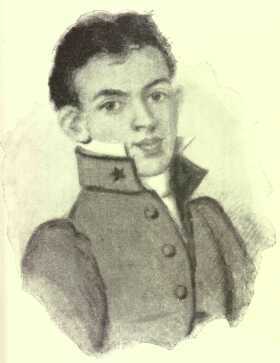
Photo Courtesy Hargrett Library
At UGA, traditions give purpose to succeeding generations of rebellious young students. One legend established more traditions of irascibility than any other student who ever attended the university. The honoree was Robert Toombs.
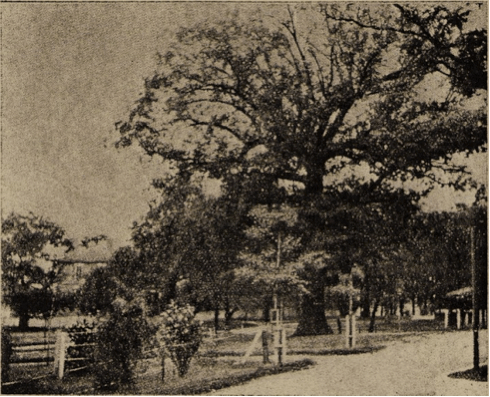
According to the official watered down campus tour, on graduation day in 1828, Toombs, a fiery, boisterous young man, stood under a large oak outside the campus chapel and bestowed a degree, which he gladly accepted with a speech. He spoke with such eloquence the attendees abandoned their seats, and the official ceremonies, to come hear the self-commencement of a twice-expelled rebel who later became the Secretary of State for the Confederacy.
Courtesy Hargrett Library
Within fifty years of this supposed event, the legend was firmly in place. The tree became permanently associated with the wavy-haired Wilkes county native. The legend of Toombs Oak was born.
All that remains of that particular chapel are the doors on the current building. Pieces of Toombs Oak were scattered across the country after it slowly crumbled apart following a lightning strike which, allegedly, occurred on the day of his death in 1885. A marble sun dial stands on North Campus to mark the spot where the massive tree stood and once served as the centerpiece for the campus landscape.
I find it hard to believe that one man could cause such a scene during a nineteenth century commencement.
UGA commencements were massive events which attracted Georgia’s most prominent men to the dirt roads of antebellum Athens along with citizens of all castes and congregations. It was a city-wide holiday. Thousands filled the chapel on North Campus, spilled out onto Broad Street, and poured all the way down to the Oconee. Buggies filled the streets. The scene was like a modern game day, tail-gates included.
That they would care so much about the words of an eighteen-year old embarrassment to the university is improbable.
The oak and the man are legends in Athens. However, the legend has no archival concurrence.
There is no evidence that the speech occurred. There are only rumors of scandal, intrigue, and the pivotal moment which began the rise of a Georgian son. Still, the longevity of the legend is a testament to the tenacity of Toombs. Somehow, the intemperate Toombs, the hard-hearted oak, and the lore which ties them together seem forged from the same steel as the sword of Camelot. They cannot, and possibly should not, be separated.
Yet, we must remember the real Bob Toombs.
Robert Toombs is Athens. He was unapologetically Southern yet unique.
The university often downplays his crimes in lieu of his exemplary service later as a senator and trustee in a great attempt at revision. We cannot forget the mischievous young criminal who wielded knives, pistols, and a fiery tongue on a campus riddled with Puritanical laws.
He was Athens’ original scoundrel.
His fierce independence, not his unreconstructed beliefs, is what ties him to modern Athenians.
Toombs, who was fourteen when he entered UGA, broke as many rules as possible. On record he not only possessed many weapons but beat and threatened to kill his fellow classmates on more than one occasion. He drank liquor, gambled nightly, and generally led a cantankerous life. He deserved his expulsions for trying to kill two brothers who cheated at cards and because he sat on campus, near where the Arch stands today and drunkenly denigrated pedestrians on Broad Street.
Long before the Greek culture existed on campus, Toombs embodied the rebel yells heard on Clayton, Washington, and a litany of other Athenian streets on any given modern night. Before the sounds of Fender guitars and synthesizers poured out of the 40 Watt into the Georgian air, Toombs filled the streets with riotous curses and busted glass.
We live in a city struggling to cling to itself through change, both necessary and not. As the swelling tide of commercialism and conformity threatens our Classic City, we must remember the tenacity of Robert Toombs and stand certain in our rebellious nature.
Throughout his life he stood against powers which tried to change him. Through his tumultuous days as a student, his service as Confederate Secretary of State, and his status as a living relic, to the end of his life he maintained a sense of pride and certainty of who he was: Unapologetic, unrepentant, and untamed.
There are more legends in Athens which make us wickedly independent. Yet, we must work each day to remember our collective history. It gives us knowledge of the origins of our independence and collective rebelliousness, and separates us not only from the other polities of our state, but also the world.
Athens, we must remain untamed.
 Anthony Sadler